Tape Doctors: Meet the Obsessives Rescuing Hip-Hop's Forgotten Sessions Before They Disappear Forever
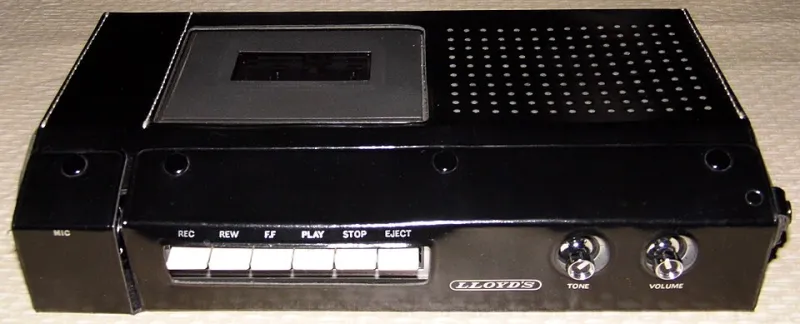
Photo: Joe Haupt from USA, CC BY-SA 2.0, via Wikimedia Commons
The cassette is warped. The frequency response is shot. There's a ceiling fan somewhere in the recording, and the MC's voice keeps disappearing behind a wall of tape hiss every time he hits a hard consonant. By any professional standard, this recording is garbage.
To Devon Harris, it's a primary source.
Harris, a 34-year-old audio engineer and collector based in Philadelphia, has spent the better part of a decade running degraded hip-hop recordings through a meticulous restoration process — cleaning noise floors, recovering lost frequencies, stabilizing warped playback speeds — to produce listenable versions of sessions that were never meant to survive. His hard drives hold hundreds of rescued files: basement freestyles from the late '90s, cipher recordings captured on flip phones, demo tapes that circulated through neighborhoods before the internet made distribution easy.
None of it was ever supposed to be history. Now it is. And if people like Harris weren't working to save it, most of it would be gone.
What Gets Lost When Nobody's Watching
Hip-hop has always had a complicated relationship with documentation. The culture was born in spaces that weren't exactly prioritized for archiving — block parties, park jams, basement sessions, street corners. The recordings that exist from those early years are often accidental: someone happened to have a tape running, someone's older brother pointed a camcorder at the right moment, someone kept a cassette in a shoebox instead of throwing it out.
The further you get from the commercial mainstream, the worse the preservation problem becomes. Major labels kept records of what they owned. Everything else — the regional scenes, the unsigned legends, the artists who blew up locally and never crossed over — was left to chance and individual memory.
"There's an entire oral and sonic tradition that exists only in degraded form, if it exists at all," Harris says. "And every year that passes, more of it degrades past the point of recovery. Tape doesn't wait for you."
The technical reality is harsh. Magnetic tape deteriorates. Cassette shells crack. DAT tapes — a format that briefly dominated professional recording in the late '80s and '90s — suffer from a condition called sticky shed syndrome that can render them unplayable. Even digital recordings from early consumer devices are vulnerable: corrupted files, obsolete formats, dead hard drives. The window for recovery is always closing.
The Restoration Process
What Harris and a loose network of like-minded archivists do is part science, part intuition, part obsession. A typical restoration project might start with a cassette that needs to be "baked" — literally placed in a food dehydrator at low temperature to temporarily restore the magnetic coating enough to be played without shedding. From there, the audio gets transferred to a digital format using high-end converters, then processed through specialized software to reduce noise, repair gaps, and reconstruct frequencies that were never properly captured in the first place.
The goal isn't perfection. It's intelligibility. "I'm not trying to make it sound like it was recorded in a professional studio," Harris explains. "I'm trying to make it sound like what it was — a real moment, captured imperfectly, that still has something to say."
In Chicago, a collector who goes by Archie Wax has been focused specifically on rescuing phone-recorded cipher sessions from the early 2000s. "People don't realize how much was documented on those early camera phones," he says. "Terrible resolution, terrible audio. But the performances? Incredible. Those sessions were proving grounds for artists who went on to do serious things, and nobody was preserving them."
Ownership Is Complicated
The work gets murky fast when you start asking who actually owns these recordings. In many cases, the answer is genuinely unclear. The person who held the tape recorder might not be the artist. The artist might not have a label deal that would give any corporation a claim. The venue where a session happened is long closed. The neighborhood where a cipher took place has been gentrified beyond recognition.
Some archivists operate quietly, sharing restored recordings only within trusted collector networks to avoid legal exposure. Others have made their work publicly available and dealt with the consequences — occasional takedown requests, occasional silence from rights holders who can't prove they hold the rights.
"Hip-hop was built on community ownership of culture," says Marisol Reyes, a music attorney who has worked with independent artists on archival rights questions. "The legal framework we have was designed for a different industry model. It doesn't map cleanly onto the way hip-hop actually works, or the way it was actually documented."
For the archivists themselves, the ethical question is usually simpler than the legal one. The work is being done because otherwise the history disappears. That feels like justification enough.
Why It Matters
This isn't just about nostalgia or collector culture. The sessions being rescued are historical documents — evidence of how hip-hop evolved, how regional sounds developed, how artists who never got their commercial moment were nevertheless shaping the culture. Without them, the story of hip-hop gets told only through what the industry chose to release, which is a profoundly incomplete version of events.
"The labels documented what they owned," Harris says. "The archivists are documenting what actually happened. Those are two very different things."
He's not wrong. And somewhere on a degraded cassette in someone's basement, there's a performance that proves it.