Lock It in the Vault: Why Independent Rappers Are Archiving Themselves Before Anyone Else Can
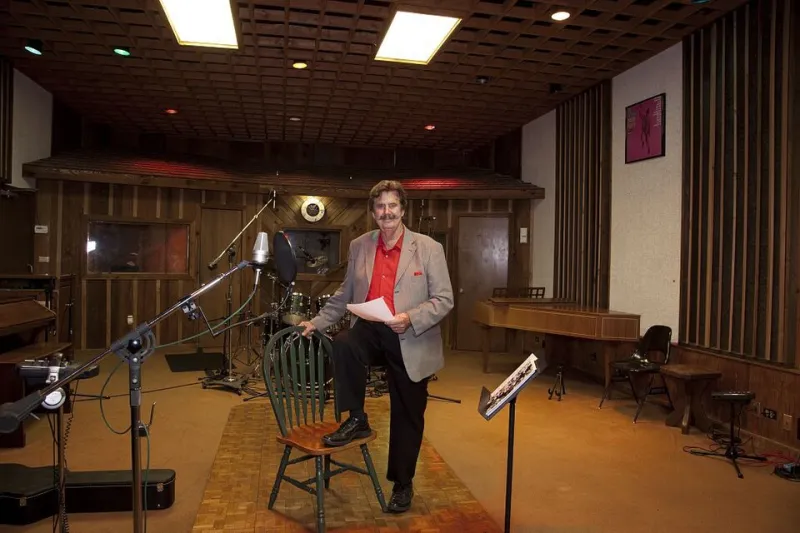
Photo: Carol M. Highsmith, Public domain, via Wikimedia Commons
There's a hard drive somewhere in a North Philly apartment with about four years of music on it that nobody has heard. No SoundCloud link. No private Dropbox folder shared with a manager. Just a Black artist, a collection of sessions, and a decision made quietly and deliberately: not yet.
This isn't a story about an artist sitting on a debut album waiting for the right moment to drop. It's something deeper. It's about a wave of independent rappers who are actively, methodically building personal archives of their own creative output — and choosing to keep them off every platform, off every streaming service, and out of every industry conversation — as a direct act of cultural self-preservation.
Call it the vault era. But don't confuse it with the industry's version, where a major label sits on a catalog to control release windows and manufacture scarcity. This is different. This is artists owning their own documentation before someone else can claim it.
The Streaming Machine Doesn't Care About Your Story
The music industry's shift to streaming fundamentally changed what it means to release music. The pressure is constant: drop a single, feed the algorithm, maintain your playlist placement, repeat. There's almost no room in that cycle for the kind of deliberate, unhurried creative process that built the careers of the artists who made hip-hop what it is.
And underground artists — the ones operating outside major label infrastructure — feel that pressure the most acutely, because they're simultaneously told they need to play the streaming game to survive and that the streaming game was never designed with them in mind.
So some of them are opting out. Not entirely. But strategically.
They're recording constantly — sessions, freestyles, experiments, collaborations with producers who may never get credited — and then holding that material in private archives. Hard drives. Encrypted folders. Physical cassettes recorded in home studios. Even handwritten lyric books with corresponding audio files catalogued by date.
The goal isn't to never release the work. The goal is to control when, how, and under what terms that work enters the world.
DIY Archival as an Act of Resistance
This practice has a lineage. Think about the way jazz musicians passed down recordings through informal networks, or how early hip-hop existed almost entirely outside commercial infrastructure before the industry caught up and tried to monetize it. The impulse to self-document has always been there. What's different now is the intentionality behind it.
Artists are borrowing from archival practices that have more in common with libraries and academic institutions than with record labels. Some are timestamping files meticulously, building personal metadata systems that log who was in the room, what equipment was used, what the conversation sounded like before the session started. Others are creating physical backups — burning sessions to disc, printing lyric sheets, storing physical artifacts alongside digital files — because they've watched enough cautionary tales play out to know that digital-only means vulnerable.
The psychology here is worth sitting with. There's something about holding your own work that changes your relationship to it. When you're not constantly publishing, you're not constantly performing for an audience that may or may not show up. You're making for yourself, for your community, for the future — and that shift in orientation produces a different kind of music.
The Unreleased as Creative Capital
Here's a concept that gets lost in the constant-content conversation: unreleased material has value precisely because it's unreleased. It represents creative possibility. It's proof that an artist's output extends beyond what any platform has been allowed to quantify.
For underground rappers navigating a world where streaming numbers are often used as a proxy for worth — by venues, by brands, by other artists deciding whether to collaborate — having a documented vault of work that exists outside that metrics ecosystem is a form of leverage. It says: I have more than what you've seen. I have been working. I am not reducible to a play count.
There's also something politically significant about Black artists specifically choosing to control their own documentation in a country with a long history of stripping Black creators of credit, ownership, and narrative authority. The vault isn't just a hard drive. It's a counter-record.
When the Archive Goes Public
Some of these vaults do eventually open. And when they do, they tend to land differently than a standard release. There's a weight to archival material — even when it's technically a debut — because the listener understands they're receiving something that was held with care.
The underground circuit has its own version of this. Producers who've been sitting on instrumental projects for years. Lyricists who've documented five years of craft before releasing a single project. When that work finally surfaces, it doesn't feel like content. It feels like testimony.
That distinction matters. In an era when the dominant model treats music as a disposable, infinitely renewable resource — always more coming, always something new to click on — the idea of music as something worth holding, protecting, and releasing with intention is quietly radical.
The Long Game
The artists building these archives aren't thinking about this week's playlist. They're thinking about what their legacy looks like in twenty years. They're thinking about who gets to tell the story of what was happening in their city, in their scene, in their moment — and they're determined that the answer is them.
That's not arrogance. That's hard-won wisdom from watching what happened to artists who didn't document themselves, who left their creative history to be reconstructed by journalists, labels, or streaming algorithms with no stake in accuracy.
The vault is a long game. And the artists playing it are betting — correctly — that the work will outlast the moment it was made in.
So the next time you hear about an underground rapper sitting on material, resist the impulse to call it a delay. Call it what it is: a deliberate act of self-determination in an industry that has never been particularly interested in letting artists tell their own stories.
The vault is open when they say it's open. And not a second before.