Written in Confinement: How Incarcerated Artists Are Feeding Hip-Hop's Underground From the Inside
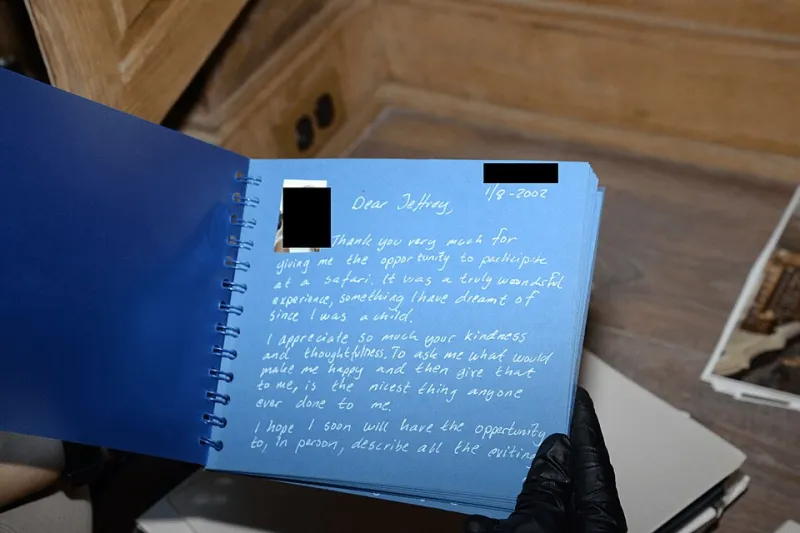
Photo: Federal Bureau of Investigation, Public domain, via Wikimedia Commons
The letter arrives handwritten. Four pages, front and back, on lined paper. The margins are dense with lyrics, annotated with notes about delivery — pause here, slower on this line, this one's the hook, trust it. At the bottom of the last page, a phone number and a time window: call collect on Tuesdays between 2 and 4, I'll be there.
This is how some of hip-hop's most raw creative work is being made right now. Not in studios. Not through DAWs or digital audio interfaces or any of the equipment that fills the conversation about modern music production. In correctional facilities across the country, artists are writing, recording what they can, and pushing their work out through networks that operate entirely below the industry's line of sight.
This piece isn't a simple celebration of that fact. The situation that produces this kind of work — mass incarceration, a carceral system that disproportionately captures Black and brown men, the stripping away of basic creative freedoms — is not something to romanticize. But the creative output that emerges from it, and the underground infrastructure that circulates it, deserves serious attention.
The Constraint That Strips Everything Else Away
Hip-hop has always had a complicated relationship with incarceration. From the explicit documentation in lyrics to the careers interrupted or ended by prison sentences, the culture and the carceral state have been in constant, painful contact for decades. What's less discussed is the creative work that happens inside — not as background context, but as primary output.
When an artist is incarcerated, the tools available for making music collapse dramatically. There's no Pro Tools session. No producer to call. In many facilities, access to recording equipment of any kind is restricted or nonexistent. What remains is the oldest technology in hip-hop: the voice, the pen, and the page.
And something happens when you strip away everything else. The writing gets denser. The imagery gets more precise. The emotional register goes somewhere that's hard to reach when you're comfortable. Artists who were working in a more commercial lane before incarceration often come out — or send work out — that sounds almost unrecognizable in its directness.
This isn't a theory. Talk to anyone who's worked with returning citizens in music programs, or who's been part of the informal networks that circulate this material, and they'll tell you the same thing: the work that comes out of constraint often hits harder than anything made with unlimited resources.
The Infrastructure Nobody Talks About
Here's the part of the story that rarely gets told: there is an actual distribution system for this material, and it functions with a sophistication that would surprise people who assume underground music only travels through social media.
Letters with lyrics get passed to family members who transcribe them, record them, or circulate them physically within communities. Collect calls get recorded — sometimes by the artist's collaborators on the outside, sometimes by family — and those recordings become the basis for tracks that are mixed and distributed through USB drives, burned CDs, and private digital channels. Voice memos recorded on contraband phones, or through whatever limited audio access exists in a given facility, make their way out through networks that have been operating for years.
The people who facilitate this movement are usually not music industry professionals. They're family members, friends, community organizers, local producers who believe in an artist's work and are willing to put in the labor of translation — taking raw, constrained recordings and turning them into something that can travel.
The resulting tracks don't sound polished. That's not a criticism. The rough edges are part of the message. When you hear a verse recorded on a phone pressed against a wall, with institutional noise bleeding through in the background, you understand something about the conditions of its creation that a clean studio recording can't communicate. The sonic environment becomes part of the testimony.
The Ethics Are Complicated
It would be dishonest to write about this without sitting with the ethical complexity.
First: the question of exploitation. There is a long history of the music industry — and culture consumers more broadly — extracting value from Black suffering without adequately compensating or crediting the people who produced it. The romanticization of "authenticity" in hip-hop has sometimes operated as a cover for exactly this kind of extraction. When underground networks circulate the work of incarcerated artists, the question of who benefits and how is not simple.
Second: the question of consent and control. An artist who is incarcerated has limited ability to manage how their work is distributed, contextualized, or monetized. The informal networks that move this material often operate on trust and relationship — but trust and relationship can be violated, and artists who are incarcerated have very little recourse when that happens.
Third: the question of what this work's existence says about the system that produced the conditions for it. It is possible to honor the creative output of incarcerated artists while simultaneously being unambiguous about the fact that mass incarceration is a structural atrocity that has stolen years, relationships, and creative potential from generations of Black and brown people. These two things are not in tension. Holding both is the only honest position.
When Artists Come Home
The work doesn't stop circulating when an artist is released. In many cases, the material created during incarceration becomes the foundation of a post-release project — sometimes the most important work of a career.
Artists who come home to underground reputations built on material they made inside are in a unique position. They've already demonstrated something to their audience: that they can make meaningful work under the most constrained possible conditions. That carries weight in a culture that has always valued authenticity and resilience.
But the transition is also complicated. Coming home means re-entering an industry that has changed, navigating relationships that may have shifted, and figuring out how to translate the rawness of what was made inside into a career that can sustain itself outside. The artists who manage that transition most successfully tend to be the ones with genuine community support — not industry infrastructure, but actual people who were holding the work while they were gone.
What the Underground Understands
The underground hip-hop circuit has always had a more honest relationship with this material than the mainstream industry. That's partly because the underground has more direct connection to the communities most affected by mass incarceration. And it's partly because the underground has never had the luxury of pretending that music exists separately from the social conditions that produce it.
When a track recorded on a contraband phone circulates through a neighborhood, it's not just music. It's a message from someone who's still inside. It's proof of life. It's a statement that creativity cannot be fully contained, even by a system designed to contain everything.
That's what hip-hop has always done at its best: found a way to speak from places where speech is supposed to be impossible. The voice through the phone line, the verse in the margin of a letter, the rough recording that travels through hands and networks to reach an audience that was waiting for it — this is the tradition, carried forward.
It's not pretty. It's not comfortable. But it's real. And in an era when so much music is optimized, polished, and algorithmically positioned to disappear, real is exactly what the culture needs.