Made in Lagos, Credited to Nobody: The Global Beat Makers Powering Hip-Hop From the Shadows
Let's start with something that doesn't get said plainly enough: American hip-hop has a sourcing problem. Not a creativity problem — the culture is as generative as it's ever been. The problem is about where that creativity actually originates, who gets compensated for it, and how conveniently invisible the supply chain becomes once a track starts climbing the charts.
Right now, some of the most innovative production work in hip-hop is coming from outside the United States. Producers in Lagos are building rhythmic frameworks that feel like the future. Beatmakers in Seoul are layering textures that American trap hasn't caught up to yet. Studios in London and São Paulo are incubating sounds that will end up on platinum records in three years — with someone else's name on the credits.
This isn't a new story. But it's getting harder to ignore.
The Pipeline Nobody Talks About
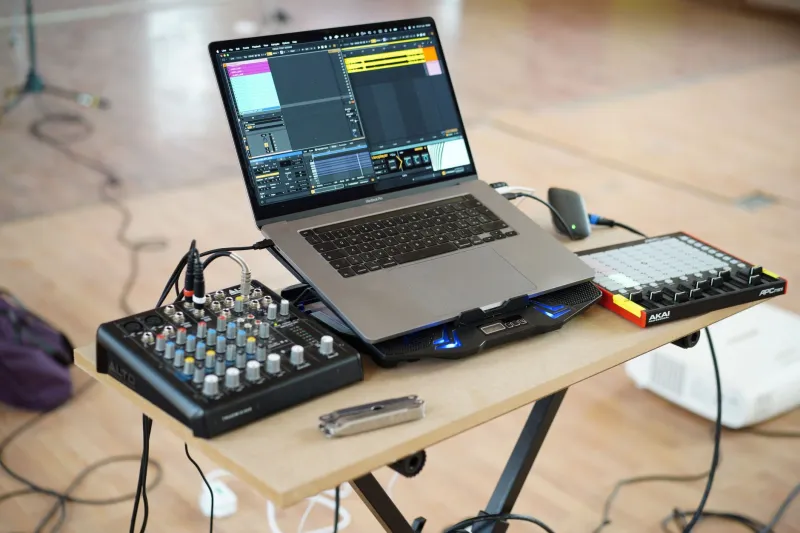
The mechanics of global beat distribution have been transformed by the internet in ways that are still shaking out. Platforms like BeatStars, Airbit, and a dozen smaller marketplaces allow producers anywhere in the world to sell or lease their instrumentals to artists anywhere else. A rapper in Houston can license a beat made in Accra with three clicks and $30. That transaction is technically legal. Whether it's ethical is a different question.
The lease model, in particular, creates a structural disadvantage for producers outside the US. A non-exclusive lease means a beat can be sold to multiple artists simultaneously. The producer gets a flat fee — maybe a few hundred dollars — and if one of those artists blows up on the track, the producer's upside is essentially zero. No royalty escalators. No backend participation. Just the initial check and a credit that may or may not make it onto the final release.
For producers in Lagos or São Paulo, where the dollar-to-local-currency exchange rate makes even a modest beat sale feel significant in the short term, the incentive to take the lease deal is real. The exploitation isn't always malicious. Sometimes it's just the math of economic inequality doing what it does.
Seoul to the Sound
The Korean production scene deserves its own conversation. South Korea's music infrastructure has been building toward global dominance for decades — everybody knows the K-pop story — but what gets less attention is the parallel development of Korean hip-hop and trap producers who've been quietly influencing American sound design for years.
Producers working out of Seoul have been ahead of the curve on certain sonic elements that American trap eventually adopted: specific high-frequency synth textures, particular approaches to 808 tuning, layering techniques that create a kind of melodic density that's become increasingly common in mainstream rap. The influence flows in both directions, sure. But the acknowledgment tends to flow mostly one way.
Part of this is a language barrier. Part of it is geography. And part of it is that hip-hop's credit culture — which has always been imperfect even domestically — becomes even more porous across international lines where legal enforcement is complicated and industry relationships are harder to maintain.
Lagos Is Not a Trend
The Afrobeats-to-hip-hop pipeline is probably the most visible example of this dynamic right now, which makes it a useful case study. The rhythmic innovations coming out of Lagos — the specific pocket, the interplay between percussion and melody, the way space gets used in a beat — have been increasingly present in American rap production for several years. Some of that influence has been properly credited and compensated. A lot of it hasn't.
What makes the Lagos situation particularly pointed is that Nigerian producers are not operating from a position of cultural innocence about their influence. They know exactly what they're building. They're watching American artists adopt their innovations, sometimes with acknowledgment and genuine collaboration, and sometimes with a kind of selective amnesia that the culture has a long history with.
"We're not a reference point," one Lagos-based producer told a music publication last year. "We're not inspiration. We're the source. There's a difference."
That distinction matters enormously, and hip-hop of all genres should understand why. The entire early history of the culture involves that exact argument being made about Black American music more broadly — the frustration of watching your innovations get adopted, repackaged, and celebrated once they'd been filtered through a different body.
The Ownership Reckoning
Some international producers are starting to fight back through structure rather than just rhetoric. Collective bargaining among producers — still rare but growing — is one approach. Direct-to-artist relationships that bypass the beat marketplace model are another. A handful of producers from the UK and Nigeria in particular have been building management infrastructure that gives them more leverage in negotiations, treating their catalogs like assets rather than commodities.
There's also a growing movement toward publishing transparency, pushing for clearer international agreements that ensure producers receive mechanical royalties even when their beats are licensed across borders. It's slow, unglamorous work. But it's the kind of structural change that actually shifts power rather than just generating a news cycle.
What Hip-Hop Owes the World
Hip-hop built its identity, in part, on sampling — on taking existing sounds and transforming them into something new. The culture has always been in conversation with what came before and what's happening elsewhere. That's not the problem. The problem is when that conversation becomes one-sided, when the influence flows freely but the credit and compensation flow back only under pressure.
The global producers building hip-hop's next chapter aren't asking for charity. They're asking for what the culture has always said it believes in: recognition of where the sound comes from, fair compensation for the work that makes it possible, and the basic respect of having your name on the thing you built.
Hip-hop traveled the world and the world made it better. It's time the ledger reflected that.