Your Name Wasn't in the Credits: The Ghost Economy Running Hip-Hop's Back End
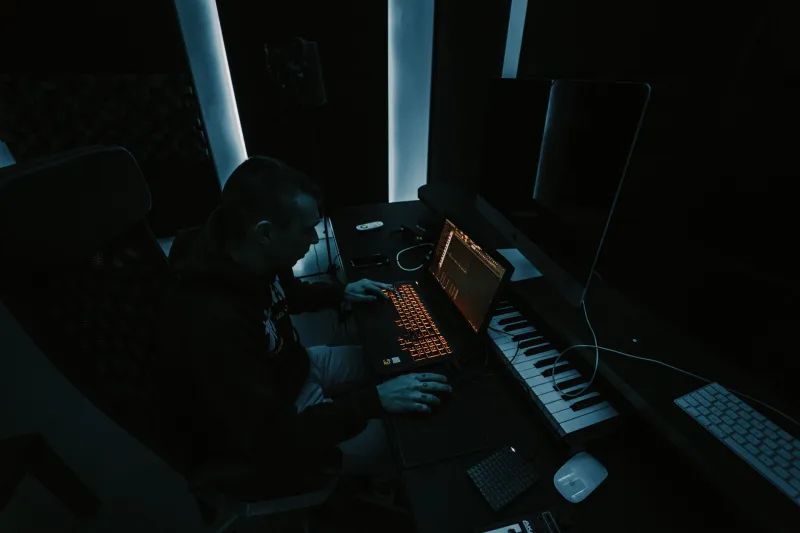
Somewhere in Atlanta, a producer I'll call Marcus — because that's not his name and he asked me not to use it — is watching a platinum plaque get mounted on someone else's wall. He built the backbone of that record. Wrote the hook, restructured the second verse, suggested the key change that made the whole thing feel like a hit. His name is on none of it. His cut was a flat fee, paid through a production company that exists specifically so paper trails stay clean.
"I don't have regrets about the money," he told me. "I have regrets about what it cost me to pretend I didn't make it."
This is the ghost economy. It runs on silence, NDAs, and the desperate arithmetic of artists who need rent more than recognition. And it is far more central to how modern hip-hop gets made than the industry ever wants to admit.
This Isn't New, But It's Different Now
Ghost-writing and ghost-producing have always existed in hip-hop. The practice predates the genre itself — pop, R&B, and country have run on professional songwriters working in anonymity for generations. In hip-hop, the ethics were always thornier, because authenticity is structural to the art form in a way it isn't in pop. The MC's voice is supposed to be their own. The story is supposed to be lived, not outsourced.
When it came out that Dr. Dre had substantial writing help on his early records, it was a genuine cultural rupture. When Jay-Z's ghost-writing history got excavated during the Nas beef, it became one of rap's most contentious debates. The conversation around who "really" wrote what has never fully cooled.
But here's what's different now: scale and systematization. What used to be an informal, case-by-case arrangement has evolved into something that looks more like an industry sub-sector. There are producers and writers who work exclusively as ghosts — who have built entire careers out of invisibility. There are management companies that specialize in brokering these arrangements. There are standard contract templates. There is, in other words, infrastructure.
The Math That Makes It Make Sense
Understand the economics before you judge the people in them. A mid-level rapper with a decent following but no major-label money is trying to keep up release velocity in an era where the algorithm punishes silence. They can't afford to slow down. Writing is hard. Production is hard. Both take time they don't have.
On the other side, a talented writer fresh out of college with fifty thousand dollars in student loan debt and a laptop full of unreleased heat will take a flat fee of three thousand dollars for a verse because three thousand dollars is real and a credit on a mid-level project is theoretical.
The transaction makes sense in isolation. It's when you zoom out that the exploitation becomes visible. Three thousand dollars for a verse that ends up on a record that streams fifty million times is not a fair exchange. It's a buy-out structured to benefit the person with leverage over the person without it. And the person without leverage almost always knows it.
"You tell yourself it's a stepping stone," one writer told me. "And sometimes it is. But a lot of times you're just building someone else's house and never getting a key."
The NDA as Weapon
The non-disclosure agreement is where this goes from uncomfortable to genuinely extractive. Ghost arrangements with NDAs don't just buy silence — they buy the right to deny, to litigate, to threaten. A writer who speaks publicly about their contribution to a hit record risks legal action that could cost them more than they ever made from the work.
This is how the ghost economy protects itself. It's not just informal industry norms keeping people quiet. It's contracts. It's lawyers. It's the implicit understanding that the person with resources can make the person without resources very uncomfortable if they talk.
Some contributors have found ways around this — vague social media posts, coded interviews, industry whispers that circulate without ever becoming printable quotes. But the official record stays clean. The credits stay wrong. The history stays incomplete.
What This Reveals About Hip-Hop's Power Structure
The ghost economy is a mirror. What it reflects back is a genre that has always celebrated individual genius while systematically obscuring collective labor. Hip-hop built its identity on the idea of the lone visionary — the MC who came from nothing and made something undeniable. That mythology is powerful. It's also, in many cases, a fiction maintained by people who had help they can't acknowledge.
This isn't unique to hip-hop. Every creative industry has versions of this. But hip-hop's specific mythology — the authenticity imperative, the self-made narrative — makes the stakes of exposure uniquely high. Getting caught with a ghost-writer in rap carries a stigma that getting caught with a co-writer in country music simply doesn't.
That stigma is the engine of exploitation. As long as the culture treats collaborative creation as shameful, the people doing the collaborating in secret will have no leverage and no protection.
The Fix Nobody Wants to Talk About
What would it actually take to change this? Transparency, first. A genuine cultural shift toward treating songwriting and production as the skilled, valuable labor they are — regardless of who ends up with the microphone. Better standard contracts with royalty participation rather than flat fees. Industry organizations with real enforcement mechanisms for credit disputes.
None of that is coming soon. The incentives are too entrenched. The mythology is too valuable. The people with power in this system built that power on the current arrangement.
But Marcus in Atlanta knows what he made. The writer who sold that verse knows what they wrote. The producer who restructured that beat at two in the morning knows what they fixed. The credits lie. The people don't.
At some point, the ghost economy has to reckon with the fact that ghosts, eventually, start to haunt.