No Mics, No Metrics: Why the Cypher Is Hip-Hop's Last Truly Free Space
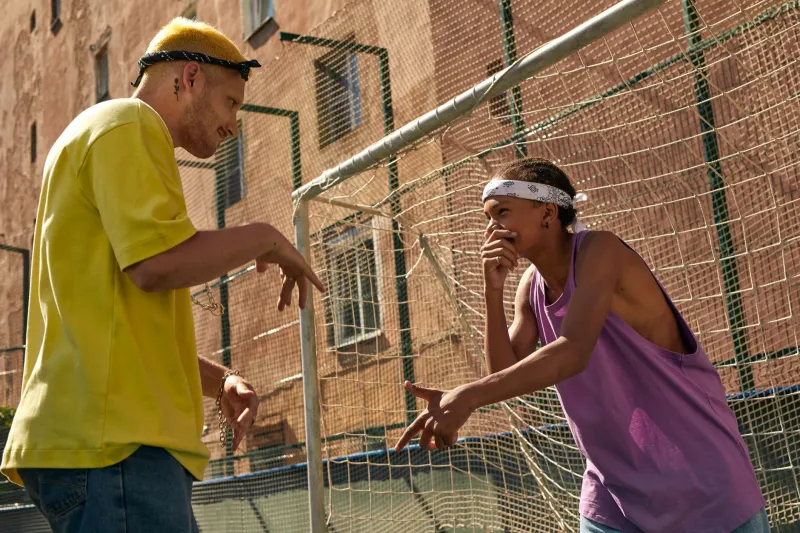
There's no green room. No label rep hovering by the door. No dashboard telling you your engagement rate dropped six percent this week. Just a circle of people, a beat bumping out of somebody's Bluetooth speaker, and whoever's brave enough to step in and say something real.
The cypher has always been hip-hop's heartbeat — the place where the culture breathes on its own terms. But somewhere between the SoundCloud era and the TikTok moment, it started to feel like that heartbeat was getting drowned out by the noise of content strategy and playlist positioning. Now, in cities from Compton to Cleveland, from Atlanta's West End to Brooklyn's Flatbush, artists are pulling back to the circle. Not out of nostalgia. Out of necessity.
The Studio Became a Trap
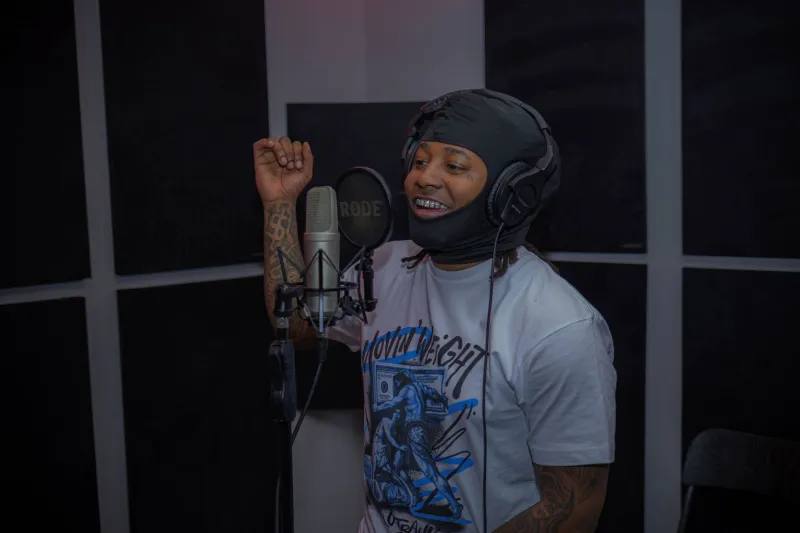
Let's be honest about what happened. The democratization of home recording was supposed to liberate artists. And in a lot of ways, it did. But it also created a new kind of pressure — the pressure to be constantly producing, constantly releasing, constantly optimized. The bedroom studio became a content factory, and somewhere in that grind, the spontaneity that made hip-hop dangerous got engineered out of the process.
When everything is tracked, tuned, and templated for algorithmic approval, you stop taking risks. You stop saying the weird thing, the vulnerable thing, the thing that doesn't fit in a hook. You start writing for retention rates instead of resonance.
The cypher doesn't allow for that kind of second-guessing. You step in the circle, and whatever comes out of your mouth is yours — unedited, unfiltered, and permanent in the memory of everyone standing there. That's terrifying. That's also exactly what hip-hop was built on.
What's Actually Happening Out Here
Across the country, grassroots cypher culture is having a genuine resurgence, and it's not being driven by brands or documentaries. It's being driven by artists who are tired.
In Los Angeles, weekly park sessions in Leimert Park — long a sacred ground for Black art and music — have drawn crowds of dozens turning into hundreds, with emcees ranging from teenagers spitting their first bars to veterans who've been in the game for twenty years. In Chicago, warehouse cyphers have become de facto laboratories for the city's evolving drill-meets-conscious-rap hybrid sound. In Washington D.C., go-go rhythms are bleeding into freestyle sessions in ways that are producing something genuinely new and genuinely local.
These aren't open mic nights with signup sheets and time limits. They're fluid, sometimes chaotic, always alive. Someone might jump in for sixteen bars and spark a conversation that turns into a collaboration that turns into a record six months later. Or it just exists in that moment, and that's enough.
The Mentorship Nobody's Talking About
One of the most underreported things happening inside these circles is the transfer of knowledge. Hip-hop has always had a tradition of older heads passing game to younger artists, but that relationship got fractured when the industry went digital. The A&R who used to walk through the neighborhood is gone. The local radio DJ who championed regional talent has been replaced by a syndicated playlist. The mentorship infrastructure largely collapsed.
The cypher is quietly rebuilding it.
When a veteran emcee steps into a circle alongside someone who's been rapping for two years, something happens that no masterclass or YouTube tutorial can replicate. You watch how someone carries themselves under pressure. You learn how to listen and respond, not just perform. You understand, in real time, what it means to hold the room versus lose it. That's an education that doesn't have a price tag.
Younger artists are absorbing cadences, techniques, and — maybe more importantly — attitudes about the craft that simply don't exist in the algorithm-driven lane. The idea that hip-hop is a conversation, not a broadcast. That's foundational, and it's being passed down in circles, not comment sections.
Regional Identity Is Being Reclaimed
Here's something the streaming era quietly stole: regional sound. When every artist is chasing the same Spotify editorial playlists, the incentive is to sand down whatever makes you specific to where you're from. The result is a kind of sonic homogenization that's made a lot of recent rap feel interchangeable regardless of area code.
Cyphers are pushing back on that, hard. When the only audience is the people standing in front of you, you stop performing for a national market and start speaking to your actual community. The references get hyper-local. The slang gets specific. The beats reflect what people actually listen to in that city, in that neighborhood.
That's how distinct regional sounds get born and protected. Detroit had its bounce. Houston had its chop. New Orleans had bounce in a completely different way. Those sounds didn't come from industry mandates — they came from communities creating for themselves, in spaces exactly like the ones springing up right now.
The Camera Is Both the Problem and the Point
There's a tension worth naming here. Some of the most watched cypher content on the internet — BET Hip Hop Awards cyphers, Sway in the Morning freestyles, the XXL Freshman cypher — exists in a space between the raw and the produced. They're cyphers that know they're being filmed, which changes the energy in ways that are hard to ignore.
But even those televised moments have sparked real conversations and real careers, and they've reminded mainstream audiences that the ability to freestyle — to think on your feet, to construct something meaningful without a safety net — is still one of hip-hop's highest forms.
The underground sessions are different, though. Even when someone's got a phone out, there's an understanding in the circle that what's happening here is primarily for the people in it. The documentation is secondary to the experience. That distinction matters more than it might seem.
Why This Moment Feels Different
People have been declaring the cypher's comeback for years, so it's fair to be skeptical. But what feels distinct about this particular moment is the intentionality behind it. Artists aren't just stumbling into circles — they're organizing them. They're building recurring sessions, creating safe spaces for experimentation, actively recruiting across generations and subgenres.
There's a collective recognition that something important was slipping away, and a collective decision to catch it before it's gone. That's not nostalgia. That's stewardship.
Hip-hop is fifty years old now. It's survived commercialization, co-optation, corporate ownership, and algorithmic flattening. The cypher is one of the reasons why. It's the format that keeps the culture honest with itself — that insists on presence, on risk, on the kind of human connection that no streaming metric can quantify.
The circle is still open. Step in.