Scroll to Remember: How TikTok's Hip-Hop Historians Are Outrunning Erasure
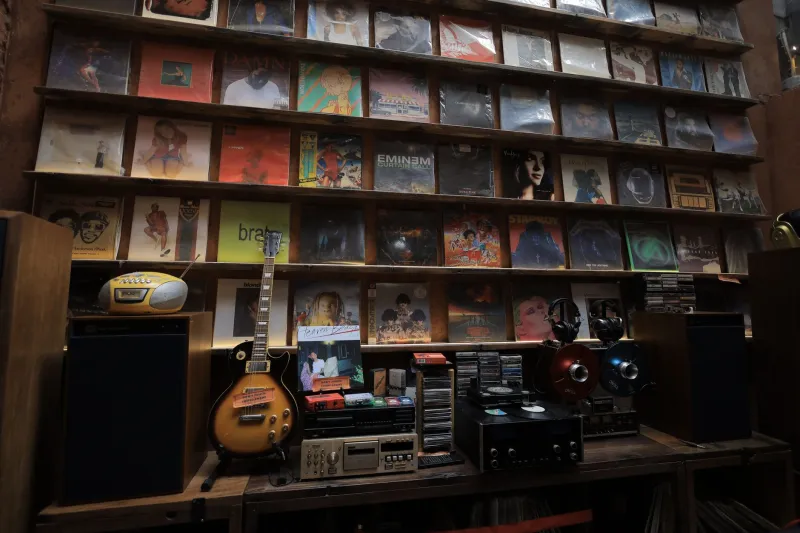
There's a woman on TikTok who goes by @griottechnicolor. She posts out of what looks like a cluttered apartment somewhere in the DMV, surrounded by crates of vinyl and printed-out liner notes taped to the wall behind her. In a recent video, she spent four minutes — an eternity in TikTok time — breaking down the beef between Cash Money and Universal that nearly buried an entire era of New Orleans bounce-rap from the mainstream record. Four minutes. Three hundred thousand views. The comments section looked like a graduate seminar.
Nobody assigned her that story. No editor greenlit it. No publicist pitched it. She just knew it mattered, and she said so.
That's the thing happening right now that the culture industry keeps sleeping on: the griot tradition — that West African practice of oral history-keeping, of community memory passed mouth to ear — has migrated to short-form video. And the people running it aren't academics or journalists. They're kids who grew up on Lil Wayne mixtapes and Wikipedia rabbit holes, and they've quietly become some of the most important archivists hip-hop has ever had.
The Gap Traditional Media Left Wide Open
Let's be honest about what mainstream music journalism did to hip-hop history. For decades, the genre's stories got filtered through outlets that were either dismissive, sensationalist, or just late. Regional scenes — Chopped and Screwed out of Houston, hyphy out of the Bay, the entire Memphis underground — got footnoted at best, erased at worst. Artists died before their legacies were properly documented. Labels buried catalog. Magazines shuttered.
The institutional memory was always fragile. Hip-hop's oral tradition was never supposed to live in archives — it was supposed to live in people. But people age out, move on, pass away. And when they go, they take receipts with them.
TikTok, weirdly, accidentally, has become the infrastructure filling that void. Creators like @djbootlegkev, @hiphopologyclass, and dozens of others with smaller followings but deep knowledge are posting daily — connecting dots between artists, explaining sample clearance disputes, resurfacing forgotten albums, contextualizing moments that happened before their audiences were born. They're doing journalism without press credentials and archiving without institutional support.
Virality vs. Veracity: The Real Tension
Here's where it gets complicated, though, because the algorithm doesn't care about nuance. It cares about watch time, shares, and emotional spikes. That creates a real gravitational pull toward the sensational — the beef, the downfall, the scandal — over the structural, the political, the quietly significant.
A video explaining how Def Jam's early contract structures exploited Black artists? Probably gets 40,000 views. A video claiming a famous rapper secretly dissed another famous rapper in a B-side from 2003? Millions. The creator economy rewards the latter, and even the most principled historians feel that pull.
"I've posted things I knew were more nuanced than the headline I gave them," one creator told us, asking to stay anonymous because they didn't want the drama that comes with calling out the platform's incentives. "You learn real fast that if the hook isn't spicy, you lose people in the first two seconds. So you're always negotiating between what's true and what's watchable."
That negotiation is real, and it's worth naming. The griot tradition was always shaped by its audience — storytellers adjusted emphasis based on who was listening. TikTok's version of that is just more brutal and more data-driven.
Gen Z Is Not Waiting for Permission
What's genuinely remarkable, though, is how much of this content is rigorous despite those pressures. A generation that gets mocked for its attention span is producing long-form video essays disguised as short clips, building multi-part series that go ten, twenty, thirty installments deep. They're citing sources in their captions. They're correcting each other in the comments. They're building communal knowledge in public.
There's a particular kind of creator emerging — call them the hip-hop continuity keepers — who approach the work with real intentionality. They're not just chasing views. They're filling in what got skipped. Harlem's late-nineties scene. The women who shaped crunk behind the scenes. The producers who built careers without ever getting their name on a marquee.
And they're doing it in the same moment the music is being made, which is genuinely new. Traditional oral history is retrospective. These creators are documenting the present tense — posting breakdowns of albums the week they drop, contextualizing new beef within decades of lineage, giving listeners the tools to understand what they're hearing as they're hearing it.
The Platform Will Not Save You
None of this is without risk. TikTok's future in the US remains legally and politically unstable. Accounts get banned. Videos get taken down over copyright claims that have nothing to do with fair use. Entire catalogs of content can disappear overnight because an algorithm flagged something.
The fragility is real, and the most thoughtful creators know it. Some are migrating their archives to YouTube, Substack, or Patreon — building redundancy into their practice the way any serious archivist would. Others are less prepared, building entire bodies of work on a platform that could be legislated out of existence before the year is out.
The work matters too much to be platform-dependent. If the griots of the internet are serious about preservation, they have to think beyond the scroll — about what happens when the feed goes dark and who holds the memory then.
But right now, today, in this moment? They're doing something essential. They're keeping the story moving. They're making sure the culture remembers itself. And they're doing it with whatever they've got — a phone, a ring light, and an absolute refusal to let hip-hop's history get footnoted into nothing.
That's the tradition. It just looks different now.