Dust on the DATs: The Underground Keepers Saving Hip-Hop's Lost Stories
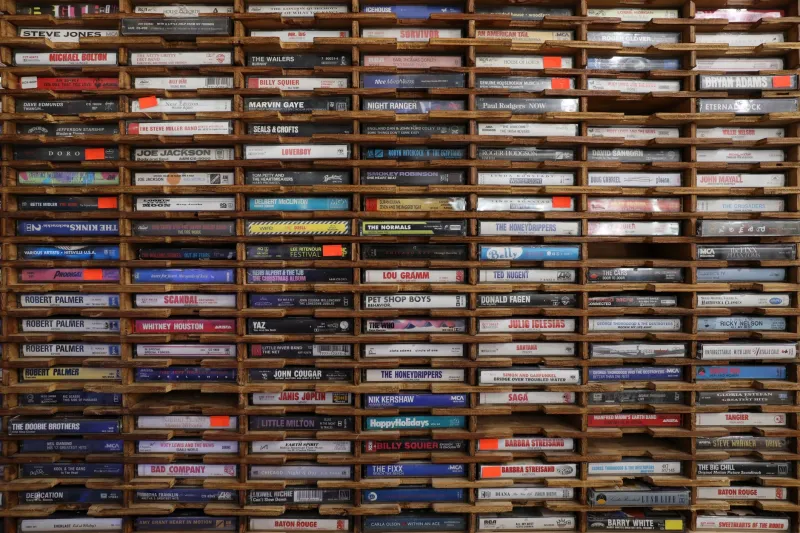
There's a storage unit somewhere in Newark holding roughly four hundred DAT tapes. Most of them are unlabeled. A few have masking tape strips with Sharpie scrawl — artist names, session dates, neighborhoods. The guy who owns them, a former radio engineer who goes by Tone Precise, has been cataloging them for three years. He hasn't slept a full night since he started, he says, because every time he cracks a new tape open, there's something on it that shouldn't exist and almost didn't survive.
"Last month I found a full session from a group out of Newark that nobody's talked about since '94," he told us over the phone, voice low like he was sharing a secret. "These dudes were nasty. Like, legitimately. And they're just... gone. Nobody knows. The label folded. The members scattered. If I hadn't grabbed these tapes from an estate sale, that session goes in a dumpster."
This is the quiet emergency nobody in the mainstream music conversation is really talking about.
The Gaps in the Official Story
Hip-hop history, as it's typically told, follows a pretty clean narrative arc. A handful of cities, a handful of eras, a handful of names that show up in every documentary, every anniversary retrospective, every streaming playlist algorithmically titled "Golden Age Classics." That story isn't wrong exactly — but it's radically incomplete.
For every artist who got a VH1 special or a 33⅓ book, there are dozens who built real regional followings, dropped records that genuinely moved people, influenced artists who went on to blow up — and then vanished from the record. Not because their work wasn't worthy, but because they didn't have the infrastructure, the label backing, or the geography to get canonized.
The mainstream narrative has always been curated by whoever controlled the distribution. And that curation left a lot of people out.
What's happening now, in basements and storage units and private Discord servers and university library back rooms, is an active pushback against that incomplete record. A loose, largely self-funded network of collectors, oral historians, and digital archivists is working to fill the gaps — one rare twelve-inch, one rescued cassette, one recorded conversation at a time.
Who's Actually Doing This Work
The people doing this preservation work don't fit a single profile. Some are academics. A lot aren't. There are former DJs who held onto crates that nobody else thought to keep. There are adult children of deceased local legends who found boxes in closets and didn't know what to do with them until they found communities online who did. There are librarians at HBCUs quietly digitizing collections that have no institutional funding. There are fans in their forties who started out just wanting to find a song they remembered from childhood and ended up building searchable databases.
Marcellus "Book" Hayward runs a Substack and a physical zine out of Atlanta documenting the city's pre-Dungeon Family rap scene — the groups and solo artists who were active in the late '80s and early '90s before Organized Noize and OutKast put Atlanta rap on the global map. He conducts his own interviews, tracks down original pressings, and publishes extended oral histories from people who were there.
"The people who know this history are in their fifties and sixties now," he said. "Time is genuinely running out. You wait another ten years and a lot of these firsthand accounts are just gone. The knowledge walks out the door with the people who have it."
That urgency is shared across this entire community. It's not nostalgia driving it. It's a very practical recognition that biological and material decay are real, and that the window for capturing certain things is closing.
The Digital Question
Digitization sounds like the obvious solution, and in many ways it is — but it comes with its own complications. Bootlegging and archiving exist in a legally murky overlap. Unreleased recordings are somebody's intellectual property, even if that somebody has no current plans to release them and may not even know the recordings still exist. Uploading a lost session to YouTube might save it from physical degradation, but it can also trigger takedowns, create legal exposure for the person who uploaded it, and — in cases where surviving family members are involved — become genuinely fraught.
Some archivists have started working directly with estates and surviving artists to navigate this carefully, negotiating informal agreements that allow preservation without public release, or limited-access archiving through institutions. Others operate in the gray zone, sharing materials through private networks and encrypted channels, prioritizing access over legal clarity.
The conversation happening inside these communities about how to do this ethically — who owns the culture, who gets to decide what's preserved and how it's shared — is one of the more genuinely interesting debates in music right now. And it's happening almost entirely outside mainstream media coverage.
Challenging the Canon From Below
What makes this movement significant beyond just saving old tapes is what it does to the story of hip-hop itself. Every artist recovered, every session documented, every oral history recorded is a small act of narrative resistance. It's saying: the version of history you've been given is not the whole version. There were other centers of gravity. Other innovations. Other voices that mattered.
Regional scenes in cities like Louisville, Richmond, Albuquerque, and Memphis developed distinct sonic identities that influenced the artists who came after them — sometimes directly, sometimes through osmosis — but rarely get acknowledged in the official timeline. The archivists working those specific territories are essentially rewriting local history in real time, building records that didn't previously exist in any organized form.
This is what J. Period has always been about, in a sense — the idea that the real story of the music lives in the details, the context, the connections that don't make it onto the press release. The vault keepers are doing that work at scale, and they're doing it without grants, without institutional support, without anybody asking them to.
The Long Game
None of this is fast work. Tone Precise estimates he has another two years of cataloging before he's through his Newark tapes, and that's working evenings and weekends around a day job. Book Hayward publishes when he can, which is maybe twice a month if he's lucky. The librarian at a mid-sized HBCU who's been digitizing donated cassettes asked us not to use her name because she's doing most of it on her own time with her own equipment, and she doesn't want administrative attention until she has something more complete to show.
But the work is accumulating. The databases are growing. The oral histories are being recorded and stored. Slowly, the gaps in the official story are getting filled in by people who refused to accept that the gaps were just the natural shape of history.
Hip-hop is fifty-plus years old now. It has a past complicated enough and rich enough to sustain serious archival work for generations. The question is whether the people with the resources — the labels, the streaming platforms, the foundations — will eventually show up to support the people already doing the heavy lifting.
Until then, the vault keepers keep showing up. Tape by tape. Story by story. Making sure the culture remembers what the industry tried to forget.