Show Up or Miss Out: The Underground Hip-Hop Showcases Happening Off the Record
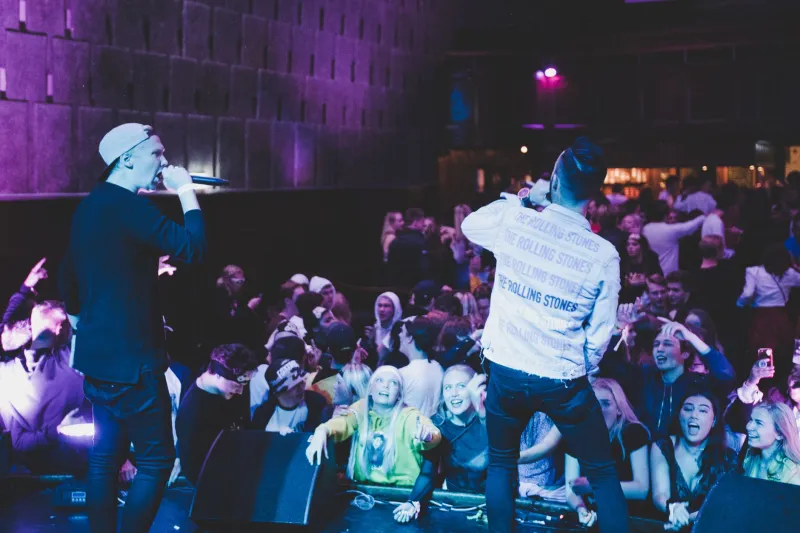
There's a certain kind of magic that lives in a room where nobody's filming. You feel it the second you walk in — the air's a little thicker, the bass a little more personal, and the energy is doing something that no algorithm has a name for yet. Hip-hop has always had a heartbeat that streaming platforms can't quite capture, but right now, a growing wave of artists, curators, and collectives are making that gap intentional.
They're building experiences designed to disappear.
The Room Is the Point
Across cities like Atlanta, Chicago, Los Angeles, and Philadelphia, invitation-only showcases have been quietly multiplying for the past few years. These aren't open-mic nights or industry showcases with A&R reps nursing cocktails in the back. These are curated, word-of-mouth gatherings — sometimes capped at 50 people, sometimes fewer — where the performance is the whole event and documentation is either banned outright or strongly discouraged.
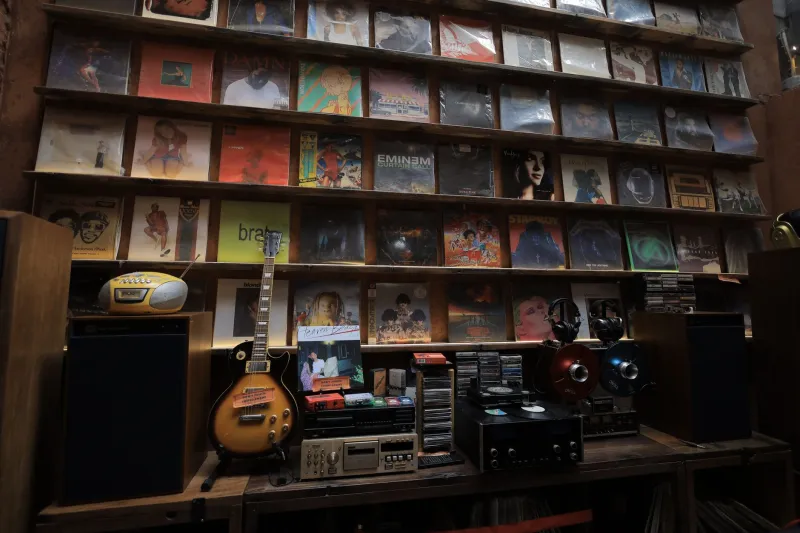
The venues vary wildly. A converted barbershop in West Philly. A record collector's loft in Leimert Park. A coffee roastery in Chicago's South Side that transforms after midnight. What they share is intimacy, intention, and an almost allergic reaction to the idea of content creation.
"We started doing these nights because we were tired of performing for phones," says one Brooklyn-based rapper who's been running a monthly underground showcase for the past two years — he asked to remain unnamed, which is sort of the whole point. "When people are recording you, they're not really with you. They're already somewhere else, thinking about the caption."
Scarcity as a Statement
In an attention economy built on infinite scroll and perpetual availability, choosing to make something ephemeral is genuinely radical. Hip-hop, more than almost any other genre, has been shaped by the logic of virality — the 30-second clip that blows up a career, the freestyle that gets a million views before the weekend. That system has produced real wins for real artists. But it's also flattened the performance experience into a content delivery mechanism.
What these underground showcases are doing is essentially the opposite. They're betting that scarcity — the fact that you had to be there — creates a different kind of value. Not commercial value, but cultural and communal value. The kind that lives in your chest and comes back to you randomly at 2 a.m.
This isn't new thinking, exactly. Hip-hop was born in spaces like this — block parties, rec center gyms, parks in the Bronx where the only way to hear the music was to show up. What's new is the self-consciousness of it, the deliberateness. Artists aren't just performing in small rooms because they don't have access to bigger ones. Many of them have the bigger rooms. They're choosing this.
Who Gets In and Why That Matters
The invitation-only structure of these events raises real questions about access and gatekeeping. Hip-hop has always had its hierarchies — who's hot, who's cosigned, who gets to sit at the table. Critics of the underground showcase model argue that "curated" can easily become code for exclusionary, that the vibe-policing of intimate spaces can replicate the same tired power dynamics the culture claims to be pushing against.
It's a fair critique and the better organizers know it. The most thoughtful showcases aren't building velvet-rope scenes — they're building intentional communities. Invites go out through neighborhood networks, mutual aid circles, and local artist collectives rather than industry contact lists. The goal isn't exclusivity for its own sake but rather context — making sure the room understands what it's witnessing and why it matters.
"The invite isn't about status," explains one Chicago-based event curator who runs a quarterly showcase out of a South Side community space. "It's about curation in the original sense. We want people in the room who are going to receive what the artist is giving. That's it."
The Anti-Spotify Set
There's also something happening at the artistic level that's worth paying attention to. When performers know the night won't be recorded, they take risks they wouldn't take on a stage with cameras. Sets get stranger, more personal, more experimental. Rappers will try out verses that aren't finished. Producers will play unreleased instrumentals just to hear how a live room responds. Collaborations happen spontaneously because the stakes feel lower — or maybe because they feel more real.
This is the cipher energy that hip-hop has always celebrated in theory but struggled to protect in practice. The freestyle cypher, the jam session, the unguarded moment — these have historically been the incubators of the culture's most important ideas. Streaming infrastructure, with its emphasis on polished deliverables and catalog building, has made that kind of free play harder to justify commercially.
The back room is where that play gets its space back.
You Can't Stream a Room
Here's the thing that the attention economy can't fully process: the experience of being in one of these rooms changes you in a way that watching a clip of it doesn't. There's a physiological reality to live music in small spaces — the sound pressure, the eye contact, the shared breath of a crowd that's fully present. No compression algorithm captures that. No highlight reel recreates it.
And the artists who are building these experiences know that. They're not just withholding content out of spite or anti-capitalist posturing, though there's some of that too and honestly good for them. They're making an argument about what music is for. Not for streaming numbers. Not for brand partnerships. For the people in the room, in the moment, with nowhere else to be.
In a culture that's been told its value lives in its metrics, that's a pretty powerful thing to say.
The cipher goes live every time someone shows up. The question is whether you're willing to put the phone away long enough to feel it.