Before the Drop: Why the Open Mic Stage Is Where Tomorrow's Hip-Hop Is Actually Being Born
The room smells like coffee and old wood. The PA system has a hum that the sound person has been apologizing for since 2019. There are maybe forty people seated, another ten standing near the back, and one person at the front of the room with nothing between them and the audience except a microphone and whatever they brought.
No beat drop. No producer tag. No comment section to retreat to.
This is where hip-hop came from. And right now — quietly, stubbornly, without a press release — it's where hip-hop is going back.
The Long Memory of the Mic Stand
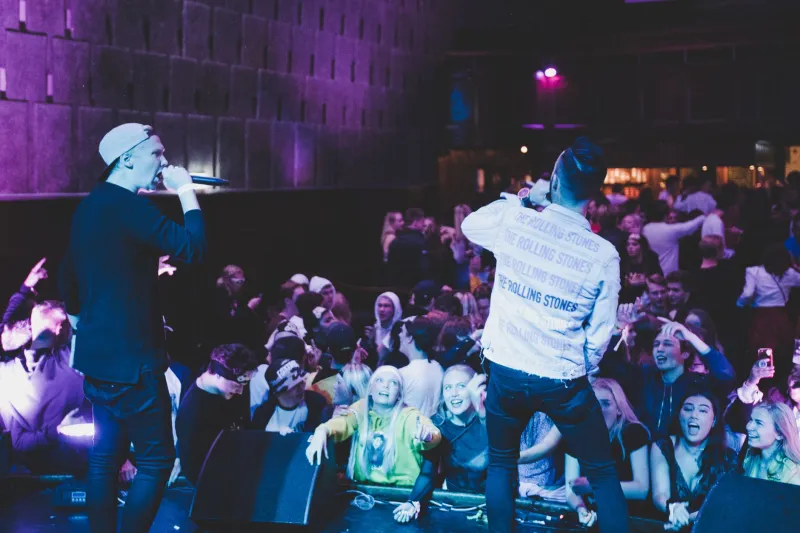
Before hip-hop had a recording industry, it had a live culture. Block parties. Park jams. Venues where the DJ was the architect and the MC was the voice of the room. The technology was minimal. The stakes were immediate. You either moved the crowd or you didn't, and the crowd told you directly, without the buffer of analytics or engagement rates.
Spoken word and poetry slam circuits have always run parallel to hip-hop, drawing from the same well of language, rhythm, and community testimony. The Last Poets, Gil Scott-Heron, the Nuyorican Poets Cafe — these weren't footnotes to hip-hop history. They were its nervous system. The DNA that rap music carries in its most ambitious moments traces directly back to a person standing in front of people and speaking the truth at volume.
What's happening now, in venues across Chicago, Atlanta, Los Angeles, New York, Houston, and dozens of cities in between, is a rediscovery of that lineage — and a recognition that what the live spoken word space offers cannot be replicated by any streaming platform currently in existence.
What the Stage Teaches That the Studio Can't
Talk to enough working artists and a pattern emerges: the ones who can hold a room, who can turn a live performance into something genuinely electric, almost universally have a background in live spoken word or open mic culture. Not always. But often enough to notice.
"I recorded a project before I ever performed live," admits Talia Osei, a 24-year-old rapper and poet based in Chicago who has been active in the city's spoken word scene for three years. "I thought the music was good. Then I did my first open mic and I understood, for the first time, what good actually meant. The feedback is immediate. The room doesn't lie."
The technical lessons are real: breath control under pressure, the management of silence, the ability to read an audience and adjust in real time. But the deeper education is harder to quantify. It's about learning what your words actually do to people when there's nothing softening the impact.
"You can spend months on a lyric in the studio," says Marcus Webb, a slam poet and rapper from Atlanta who has competed on the national poetry slam circuit. "But until you've said it out loud to strangers who didn't ask to hear it, you don't actually know if it works. The open mic is the only honest test."
The Venues Doing the Work
Across the country, a network of spaces is functioning as an unofficial farm system for hip-hop's next wave. The Nuyorican Poets Cafe in New York, one of the oldest and most storied spoken word venues in the country, continues to produce artists who move fluidly between the poetry and rap worlds. In Los Angeles, venues like Da Poetry Lounge — which has been running weekly open mics since the 1990s — have served as early homes for artists who later found larger audiences.
In Chicago, the Young Chicago Authors program and its Louder Than a Bomb poetry festival have been incubating lyrical talent for decades, with alumni who include artists who have gone on to significant careers in both spoken word and hip-hop. Similar programs exist in Detroit, Philadelphia, and Washington D.C., operating largely without national media coverage, doing foundational work that the industry will later take credit for discovering.
What unites these spaces is a set of conditions that are almost impossible to find elsewhere: live audiences who engage critically, peer communities that provide honest feedback, and a performance format that strips away production and demands that the words themselves carry the weight.
The Mirror That Streaming Can't Hold
It would be easy to frame this as a nostalgia piece — a lament for analog purity in a digital world. That's not what this is. Streaming platforms, social media, and digital distribution have done genuinely important things for independent artists, particularly in terms of reach and financial autonomy. The argument isn't that those tools are bad. It's that they're incomplete.
Streaming metrics tell you how many people played your song. They don't tell you if the song made anyone feel something they needed to feel. Social media engagement tells you what content performs well in a particular algorithmic context. It doesn't tell you if you're actually growing as an artist.
The open mic tells you both of those things, sometimes brutally, always honestly.
"I've had nights where I walked off that stage and knew I had to go home and rewrite everything," says Osei. "You can't get that from a streaming dashboard. That information is worth more than any playlist placement I've ever gotten."
The Next Wave Is Already in the Room
The artists coming up through spoken word and open mic circuits right now are developing a particular kind of fluency — one that combines hip-hop's rhythmic intelligence with poetry's commitment to precision and live performance's demand for presence. It's a combination that tends to produce artists who are difficult to ignore.
They're not waiting for a cosign. They're not optimizing for the algorithm. They're standing in front of forty people in a room that smells like coffee and old wood, saying something true, and learning whether it lands.
Hip-hop started exactly there. And if you want to know where it's heading, that's probably still the best place to look.