Flip Your Own Script: The Art of Sampling Yourself and Taking Back What Was Always Yours
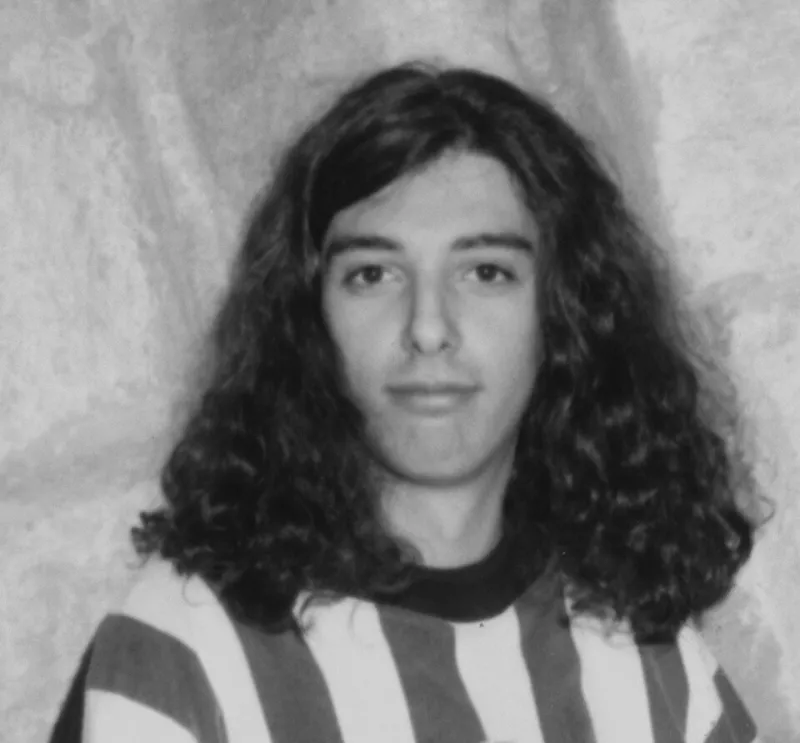
Photo: IthakaDarinPappas, CC BY-SA 4.0, via Wikimedia Commons
Sample culture has a long memory and a short conscience. The history of hip-hop is inseparable from the history of Black music being lifted, repurposed, and monetized by people who had no relationship to its creation — and that history didn't begin or end with hip-hop. It runs through blues, jazz, soul, and funk like a thread that always seems to pull in one direction: away from the people who made the music and toward the people who owned the paper.
So when artists start sampling themselves — interpolating their own hooks, flipping their own beats, building new work on the foundation of their existing catalog — it's worth paying attention to what that actually means.
The Setup
Let's be precise about what we're talking about. An interpolation isn't a direct sample. It's a re-recording of a melodic or lyrical element from an existing song, close enough to the original to be recognizable but distinct enough to constitute a new performance. The legal and financial implications are significant: when you interpolate rather than sample, you avoid clearance fees on the master recording, though you still need to negotiate the underlying composition rights.
But when you're interpolating your own work — and you own your masters and your publishing — the math changes completely. You owe yourself nothing you weren't already owed. The creative and financial yield stays in-house.
This isn't an accident. Artists who are making this move deliberately are doing so with full awareness of what the gesture means.
Ownership as Creative Strategy
Consider what Jay-Z has done across multiple albums, threading references and lyrical callbacks to earlier work in ways that function as both artistic continuity and a demonstration of catalog ownership. Or look at how Kendrick Lamar's Mr. Morale & The Big Steppers drew on sonic textures and thematic material from good kid, m.A.A.d city in ways that felt less like nostalgia and more like a deliberate assertion: this body of work belongs to one person, and that person is still here, still building.
More recently, independent artists operating without major label infrastructure have been even more explicit about the strategy. Producers who own their beats outright are licensing interpolations of their own earlier instrumentals to newer artists within their collective — keeping money circulating inside a closed ecosystem rather than leaking it out through clearance negotiations with entities that have no cultural stake in the music.
"My first project, I gave away too much," says one independent producer from Houston who asked to be identified only by his production tag, Solstice. "I didn't own the masters, didn't own the publishing. When I started over, I rebuilt everything from scratch — including going back and re-recording elements from those old records that I could legally own this time. Same music, different paper trail. That's not just art, that's survival."
The Historical Weight of the Flip
To understand why this matters, you have to understand how sample clearance has historically functioned as a tax on Black creativity. When hip-hop producers began sampling soul and funk records in the late 1980s, the legal framework for clearance didn't yet exist in its current form. The Biz Markie decision in 1991 changed everything, establishing that uncleared samples constituted copyright infringement. What followed was an explosion of clearance costs that disproportionately burdened independent Black artists while major labels — who controlled both the hip-hop releases and, often, the catalogs being sampled — were positioned to negotiate favorable terms with themselves.
The artists who created the original records being sampled? Many of them had signed away their masters decades earlier under contracts that would never survive contemporary scrutiny. They saw little of the clearance money. Their music traveled forward through time and generated wealth for everyone except them.
When a contemporary artist chooses to interpolate their own work rather than sample someone else's, they're not just making a practical financial decision. They're making a statement about who gets to profit from the continuity of Black musical tradition.
The New Practitioners
Young Guru, longtime engineer and creative collaborator who has worked with Jay-Z for decades, has spoken publicly about the importance of artists understanding the infrastructure of their own catalogs. That education is filtering down. A generation of artists who came up watching their predecessors lose masters to 360 deals and predatory contracts are approaching their own discographies with a protectiveness that previous generations weren't always able to afford.
Rapper and producer Armani Caesar, a member of Griselda Records, has built an aesthetic that explicitly references and reworks her own earlier sonic signatures — not because she's out of ideas, but because she's establishing a visual and sonic language that she controls. The self-reference is the signature. The signature is the proof of ownership.
Similarly, artists in the neo-soul and alternative hip-hop lanes — Sault, Noname, Moor Mother — have been building bodies of work that function as internally referential systems, where each new release speaks back to earlier ones in ways that reinforce the coherence of an artistic vision that belongs entirely to them.
The Flip as Resistance
There's a philosophical dimension here that goes beyond the practical. When hip-hop first began sampling, it was an act of cultural reclamation — taking the sounds of a Black musical tradition that had been commercially exploited and repurposing them for a new generation's expression. The sample was, in part, a way of saying: this music is ours, this history belongs to us, and we're going to carry it forward on our own terms.
The self-interpolation movement is running the same logic through a different circuit. The message is: not only is this music ours historically, it is ours legally, financially, and creatively — and we are going to demonstrate that ownership by building new work on top of it, by treating our own catalog as a resource we can access freely because it was never anyone else's to take.
Sample culture taught hip-hop to look backward for raw material. What's happening now is something more radical: artists are looking backward at themselves, and finding that the most valuable archive they have is the one they built.
Flip your own script. The royalties stay home.