No Co-Sign Needed: How Gen Z Rap Is Rewriting the Rules of Coming Up
There's a scene that played out a thousand times across hip-hop history. Young artist corners the veteran at a show, slips him a CD, waits by the phone. Maybe the call comes. Maybe it doesn't. Either way, the whole transaction was clear: you needed someone who already had the keys to hand you a copy. That's just how the culture moved.
Except it doesn't move like that anymore. Not even close.
The generation of rappers coming up right now — the kids who were in middle school when Kendrick dropped To Pimp a Butterfly — are operating by a completely different set of rules. They're not waiting on co-signs. They're not grinding through apprenticeship years in somebody else's shadow. They're building their own lanes from scratch, often before they're old enough to rent a car, and they're doing it without asking anyone's permission.
That shift is more significant than it might look on the surface.
The Old Architecture
To understand what's changing, you have to respect what the mentor model actually built. Jay-Z coming up under the wing of Jaz-O. Eminem finding his footing through Dr. Dre. Nicki Minaj cutting her teeth alongside Lil Wayne in Young Money. Drake, same story. The list goes on deep into the culture's DNA.
Those relationships weren't just about clout transfer. They were knowledge pipelines. How to navigate a label deal. How to handle a room full of suits who don't actually respect you. How to protect your publishing when everyone around you is trying to get a piece. Veterans carried institutional knowledge that wasn't written down anywhere, and the apprenticeship model was how that knowledge got passed along.
It was imperfect — sometimes exploitative, often gatekept along racial and gender lines — but it had a function. It kept the culture's hard-won lessons alive from one era to the next.
What Broke the Chain
A few things happened at once, and the timing mattered.
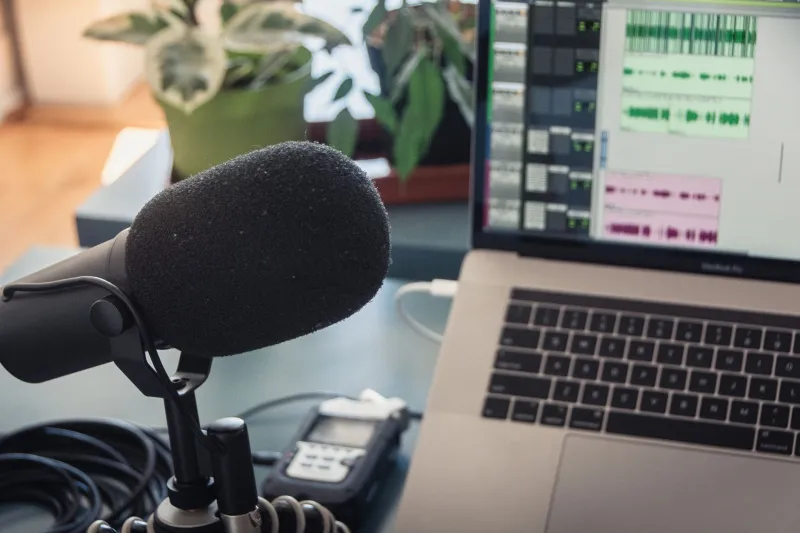
First, the tools got cheap and then they got free. GarageBand shipped on every Mac. FL Studio cracked versions floated around the internet. Then came free plugins, YouTube tutorials, and eventually entire communities on Reddit and Discord dedicated to bedroom production. The studio — once a physical space controlled by people with money and relationships — became a laptop and a decent pair of headphones. The gatekeeping infrastructure just... dissolved.
Then social media flipped virality from a label-controlled commodity into something any teenager with a phone could manufacture. TikTok in particular rewired the whole discovery mechanism. A song doesn't need radio spins or a major label's promotional budget to reach a million ears. It needs fifteen seconds and the right moment. Artists like Lil Nas X proved that model works at the highest level, but it's been replicating itself at every tier of the industry ever since.
And then there's the streaming economy — which, for all its well-documented flaws when it comes to artist compensation, did eliminate one of the mentor model's core leverage points. You no longer need someone with distribution connections to get your music into the world. DistroKid and TuneCore will put your record on every platform on earth for less than fifty bucks a year. The infrastructure that made veteran co-signs valuable just isn't as scarce as it used to be.
The New Playbook
What's emerging in place of the old apprenticeship model is something more horizontal. Gen Z artists are building peer networks instead of vertical mentor chains. They're finding each other on SoundCloud comment sections and Discord servers, collaborating across cities and time zones without ever meeting in person, assembling creative ecosystems that don't have a single elder statesman at the top.
Look at how a lot of the most interesting young rap coming out right now actually gets made. It's collaborative from the jump — producers and MCs who met online, artists jumping on each other's tracks before either of them has a real fanbase, whole friend groups releasing music simultaneously and cross-promoting to their combined audiences. It's less apprenticeship and more collective, which is its own kind of power structure, just a flatter one.
There's also a different relationship to authenticity at play. Older generations operated under an unspoken rule that you had to prove yourself within the culture's existing framework before you could bend it. You paid your dues, you earned your stripes, and then you got to experiment. Gen Z isn't waiting for that permission. The willingness to mix genres, play with aesthetics, and refuse easy categorization isn't a sign of disrespect for hip-hop's lineage — it's a direct product of growing up with access to all of that lineage simultaneously, on demand, for free.
What Gets Lost, What Gets Gained
Here's where it gets complicated, though. Because some of what the mentor model transmitted wasn't just business knowledge — it was cultural memory. The stories that don't make it into documentaries. The hard lessons about how the industry will try to separate you from your money and your masters. The understanding of where the music came from and what it was built to do.
There's a real question about whether peer networks can carry that weight the way vertical relationships did. When everyone in your circle is figuring it out at the same time, you're all learning together, but you're also all making the same mistakes together. Some of those mistakes are expensive.
And there are veterans who are genuinely trying to pass knowledge along — artists and managers and producers who understand that the culture needs continuity to survive. The problem is that the mechanisms for that transmission have broken down. Young artists aren't coming to industry showcases. They're not necessarily in the same physical spaces where those conversations used to happen. The knowledge is willing, but the infrastructure to deliver it is outdated.
Building Without a Blueprint
None of this is an indictment of what Gen Z is building. If anything, the refusal to wait for someone else's validation is one of the most hip-hop things you can do — the culture was literally invented by young people who weren't being let into rooms and decided to build their own rooms instead.
What's different now is scale and speed. The barrier to entry has dropped so dramatically that the dues-paying phase — which was always partly about filtering talent and partly about control — no longer serves its original function. Artists are arriving fully formed, or close enough to it, with audiences already attached.
The mentor model wasn't sacred. It was a system built for specific conditions that no longer exist. Gen Z rappers aren't rejecting the culture's wisdom — they're just finding new ways to access it, and new ways to build something worth passing down when their turn comes.
The co-sign isn't dead. It's just not the only door anymore. And that's worth paying attention to.