Knobs, Not Clicks: The Producer Revolt Against the DAW and What It's Doing to Hip-Hop's Sound
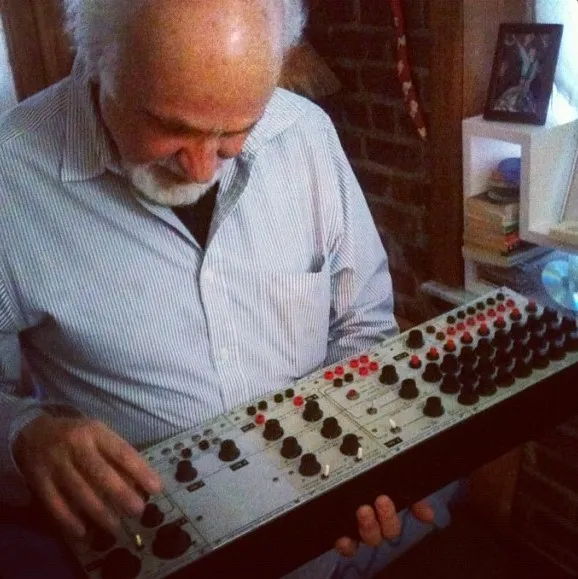
Photo: Ethan Hein, CC BY 2.0, via Wikimedia Commons
Let me paint you a picture. It's 2 a.m. in a cramped studio apartment in Detroit. There's a Roland TR-808 on the table — not an emulation, not a plugin, the actual machine, knobs worn smooth from decades of use. Next to it, a four-track cassette recorder. The producer behind all of it, a 28-year-old who goes by Flux, hasn't opened a laptop in three months. He's not going back.
"The DAW made everything possible and nothing interesting," Flux tells me over the phone, his voice carrying the particular conviction of someone who has genuinely thought this through. "When you can do anything, you end up doing what everyone else is doing. The limitations are where the music lives."
This is not a new argument, but it's gaining serious traction in underground production circles right now. Across the country, a loose but passionate movement of beatmakers is ditching the infinite canvas of software-based production in favor of hardware — vintage drum machines, analog synthesizers, reel-to-reel tape decks, circuit-bent instruments that behave unpredictably and sound like nothing in any sample library. The results are turning heads, and the philosophy behind it is worth taking seriously.
The Problem With Infinite Options
Digital audio workstations — Ableton, Logic, FL Studio, take your pick — are extraordinary tools. The argument here isn't that they're bad. It's that the culture around them has calcified into a set of conventions so widely shared that you can hear them everywhere, all the time, at the same tempo, in the same key ranges, with the same processed kick drums.
The DAW didn't create this problem alone. Streaming platforms reward consistency. Algorithms favor familiar sonic textures. Playlist culture incentivizes music that sounds like music that already works. The feedback loop is tight and it runs in one direction: toward the mean.
"When I was coming up, producers had signature sounds because they were working with specific equipment," says Jerome "J-Smoke" Williams, a veteran producer from the Bronx who has been mentoring younger beatmakers for the past decade. "Pete Rock had that MPC swing. Alchemist had that sample selection philosophy. Now everybody's using the same plugins, the same sample packs, the same stock sounds. You can't tell one producer from another by ear anymore."
The hardware revival is, at its core, a rejection of that interchangeability.
What Limitations Actually Do
Here's the counterintuitive part: taking options away makes producers more creative, not less. When Flux sits down at his 808 and his four-track, he can't undo a mistake with Ctrl+Z. He can't drag a region two milliseconds to the left. He can't layer 40 tracks and sort it out in the mix. What he can do is commit — to a tempo, to a sound, to a performance — and build something that has the texture of a decision made by a human being in a specific moment.
That texture is audible. It's what makes old records feel alive in a way that a lot of contemporary production doesn't. The slight inconsistencies in timing. The way analog tape compresses transients. The harmonic distortion that happens when you push a signal too hard through vintage circuitry. These aren't flaws to be corrected; they're the sonic fingerprint of a particular machine, a particular moment, a particular set of hands.
"When I play something back on tape and it sounds different from what I expected, that's not a problem — that's information," says Keisha Dade, a producer and multi-instrumentalist based in Atlanta who has been building her setup around a Tascam 388 reel-to-reel and a collection of '70s synthesizers. "The machine is a collaborator. It has opinions."
Live Improvisation as Production Philosophy
Some producers in this movement are taking things further, incorporating live performance into the beat-making process itself. Instead of building a track piece by piece in a DAW, they're running live sessions — playing patterns in real time, recording the whole thing to tape, keeping the takes that work and discarding the ones that don't. It's closer to jazz methodology than traditional hip-hop production, and the music reflects that.
The improvisation element introduces a spontaneity that's almost impossible to fake in software. When a producer is performing a beat rather than constructing it, the energy is different. Subtle variations in timing become feel. Happy accidents become hooks. The music breathes in a way that quantized, grid-locked production often doesn't.
For MCs who've been working with these producers, the difference is palpable. "The beats have personality," says Celo, the Brooklyn lyricist. "They're not perfect, and that imperfection gives me something to respond to. I write differently over them. More instinctively."
The Practical Barriers and Why They Don't Matter
Vintage hardware is expensive. Tape is expensive. Learning to operate analog equipment properly takes time that a laptop and a pirated DAW don't require. These are real barriers, and they're not equally distributed across producers from different economic backgrounds.
But the movement is finding workarounds. Gear-sharing arrangements within collectives. Secondhand markets on eBay and Reverb where older equipment can be sourced cheaply if you're patient. And increasingly, a DIY ethos around circuit bending and hardware modification that turns broken or inexpensive equipment into something genuinely unique.
The point isn't that everyone needs to spend thousands of dollars on vintage gear. The point is that the philosophy — constraint as creative fuel, limitation as liberation — is available to anyone willing to think differently about the tools they already have.
"You can do this with a $40 four-track and a broken drum machine," Flux says. "The gear isn't the revolution. The mindset is."
Hip-hop was built on exactly that mindset — on making something extraordinary out of whatever was available. Watching it resurface in the production underground, in rooms full of knobs and tape hiss and machines with opinions, feels less like nostalgia and more like memory. The culture remembering what it already knew.